
Australia's Favourite Online Defibrillator & AED Supplier

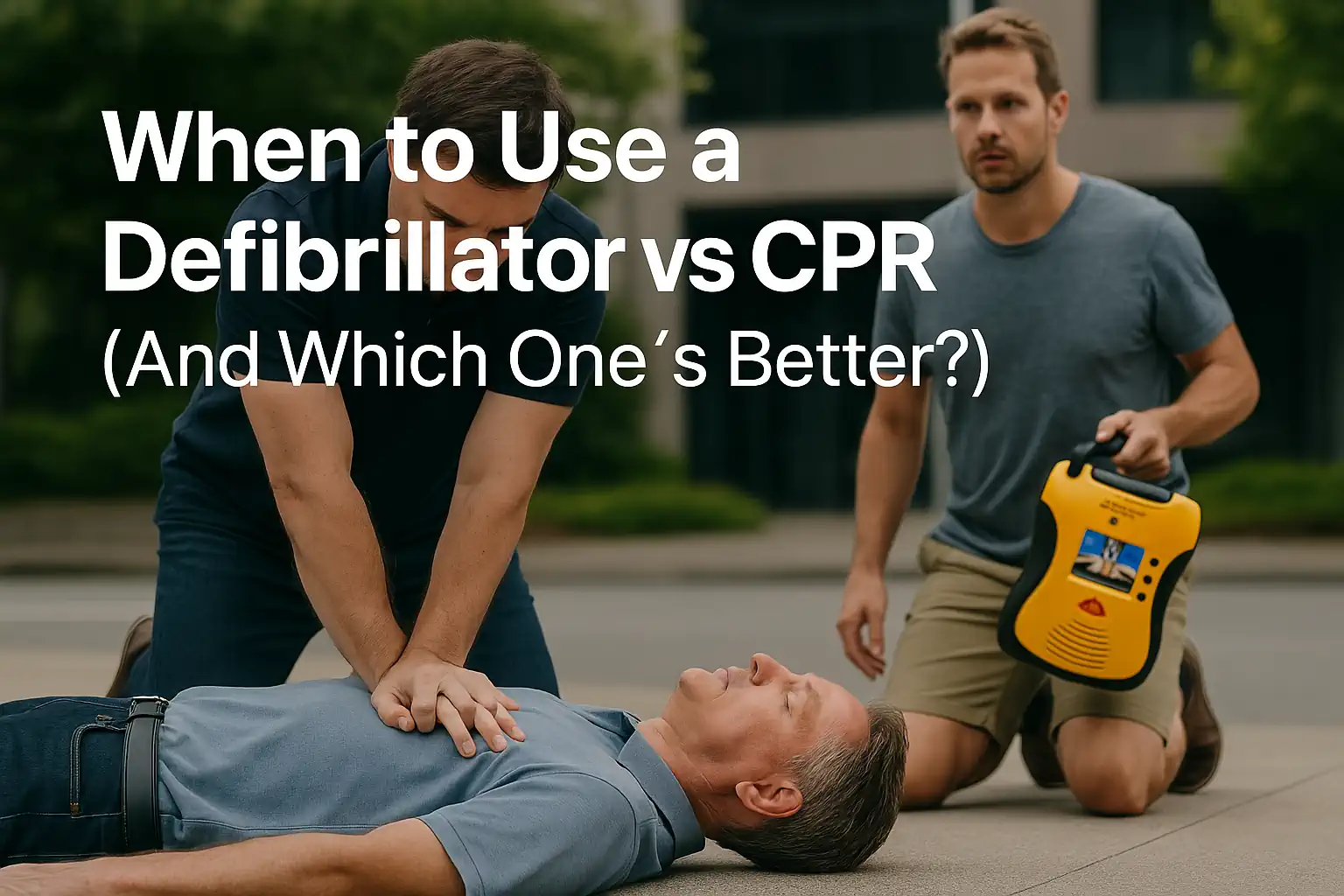
When to Use a Defibrillator vs CPR (And Which One’s Better?)
💡 CPR keeps them going. The defibrillator brings them back.
Table of Contents
Let’s clear something up right off the bat: CPR and defibrillators aren’t rivals — they’re teammates. But knowing when to use one, the other, or both? That’s what saves lives.
We get asked all the time:
“Is a defibrillator better than CPR?”
“Do you still need CPR if you’ve got a defib?”
“When do I use a defibrillator?”
Here’s the simple, practical answer — no fluff.
💡 CPR vs Defibrillator — What’s the Difference?
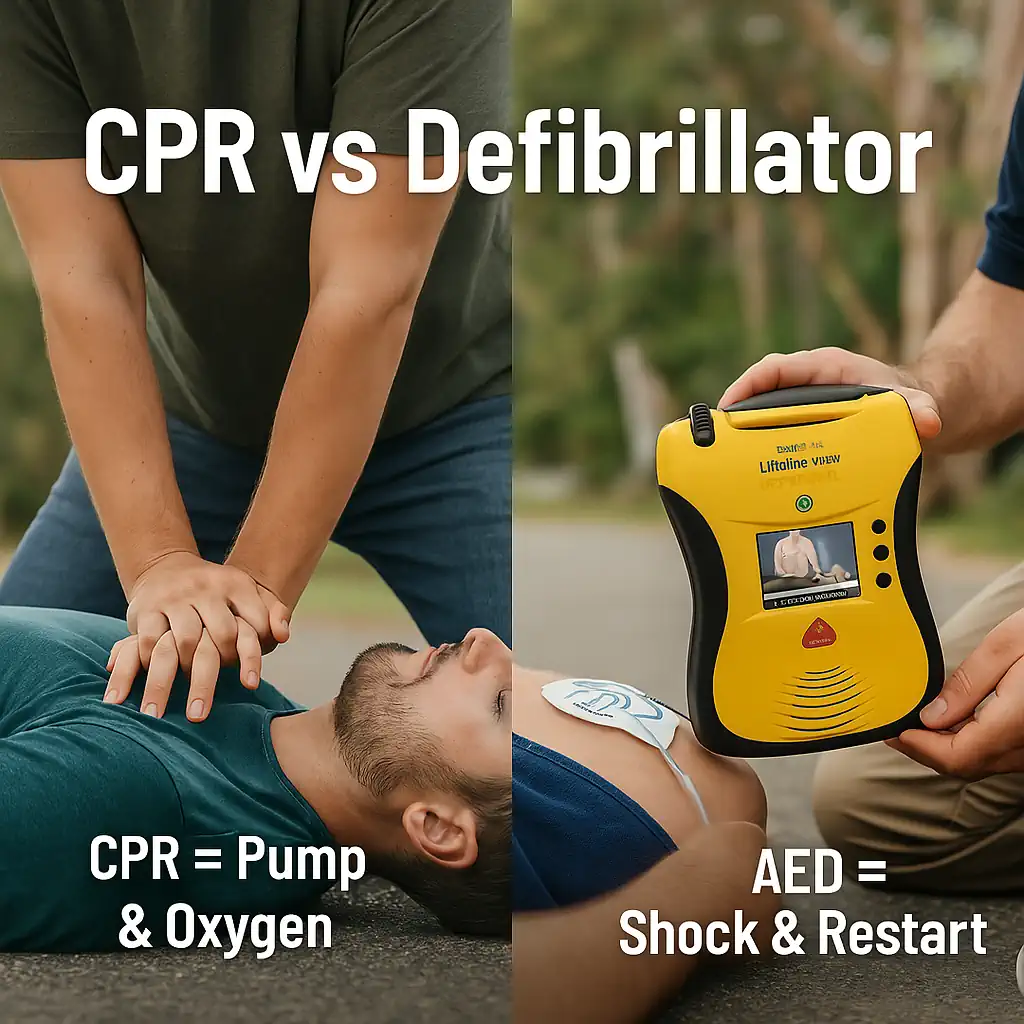
- CPR (Cardiopulmonary Resuscitation): You’re manually pumping the heart with chest compressions and keeping oxygen flowing with rescue breaths.
- Defibrillator (AED): A device that sends a shock to the heart to reset it when it’s in a dangerous rhythm (like ventricular fibrillation).
They work hand-in-hand, not one instead of the other.
🚨 When to Use CPR
Start CPR immediately when:
- The person is unconscious
- Not breathing normally
Don’t waste time — you don’t need to make a medical call. Start compressions while someone else grabs a defib.
⚡ When to Use a Defibrillator (AED)
Use a defibrillator as soon as possible.
Modern AEDs are made for anyone to use — and they’re smart. Once you turn it on, it tells you exactly what to do.
💬 “Apply pads to the chest. Do not touch the patient. Analyzing heart rhythm…”
It will also tell you when to give CPR — so even if you’re unsure, just follow the voice prompts.
And if no shock is needed? It simply won’t deliver one.
💭 So… Is a Defibrillator Better Than CPR?
Defibrillators are usually what bring someone back to life.
That electrical shock resets a chaotic heart rhythm — but it won’t keep blood flowing.
That’s where CPR comes in.
CPR keeps the blood and oxygen moving so the person doesn’t deteriorate before the defib can work its magic.
🧠 In short: CPR keeps them going. The defib brings them back.
🎓 Want to Be Ready When Every Second Counts?
Knowing how and when to use CPR and a defibrillator could be the difference between life and death. But beyond learning what to do — imagine being the one who actually has a defib on hand.
Whether it’s for your workplace, sports club, or home — having an AED nearby gives someone a real chance.
Do more than know what to do — be the reason someone gets to go home


